GLP-1 medications like Ozempic, Wegovy, and Mounjaro have transformed weight loss for millions of people. Patients who struggled for years with diets and exercise are finally seeing the scale move—sometimes dramatically. Losing 50, 75, even 100+ pounds is now achievable in ways it wasn’t before.
But there’s a catch no one talks about in the drug commercials: rapid weight loss often leaves behind loose, sagging skin that won’t bounce back on its own.
As a board-certified plastic surgeon in Beverly Hills, I’ve seen a significant increase in patients seeking body contouring after GLP-1 weight loss. Here’s what you need to know if you’re considering surgery to complete your transformation.
Why Ozempic Weight Loss Creates Loose Skin
Your skin is elastic, but that elasticity has limits. When you carry excess weight for months or years, the skin stretches to accommodate it. The collagen and elastin fibers that allow skin to “snap back” become permanently damaged over time.
GLP-1 medications create a perfect storm for loose skin:
- Rapid weight loss: Losing weight quickly doesn’t give skin time to gradually contract
- Significant total loss: Many patients lose 15-25% of their body weight
- Fat loss everywhere: The medication doesn’t target specific areas—you lose fat from your face, arms, breasts, and body simultaneously
- Age factor: Many GLP-1 patients are over 40, when skin elasticity is already declining
The result? Patients hit their goal weight but are left with hanging skin on their abdomen, arms, thighs, and breasts. The number on the scale is right, but the body in the mirror doesn’t match.
Related: Loose Skin After Weight Loss: When Exercise Isn’t Enough
Common Problem Areas After GLP-1 Weight Loss
While everyone’s body is different, I see consistent patterns in where loose skin develops after Ozempic and similar medications:
Abdomen
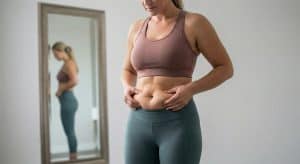
The midsection is almost always affected. Patients describe an “apron” of skin that hangs over their waistband, makes clothing fit poorly, and causes chafing and skin irritation. This is typically the first area patients want addressed.
Arms
The upper arms develop what patients call “bat wings”—loose skin that hangs from the back of the arm. No amount of tricep exercises will tighten it. Many patients avoid sleeveless tops and feel self-conscious raising their arms.
Thighs
Inner thigh skin becomes loose and saggy, causing chafing when walking and making pants fit awkwardly. The outer thighs may also develop laxity.
Breasts
Women often experience significant breast deflation—the fat is gone but the stretched skin remains, creating a “deflated balloon” appearance. Men may notice loose chest skin, especially if they previously had gynecomastia.
Face and Neck
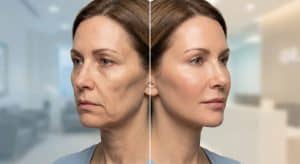
Facial volume loss (often called “Ozempic face”) creates hollow cheeks, sunken temples, and a gaunt appearance. The neck may develop loose skin and banding.
Related: Ozempic Face: How to Restore Facial Volume After Rapid Weight Loss
Body Contouring Procedures for Ozempic Patients
Different procedures address different areas. Here’s what’s available:
Tummy Tuck (Abdominoplasty)
A tummy tuck removes excess abdominal skin, tightens the underlying muscles, and creates a flatter, more contoured midsection. This is the most commonly requested procedure after GLP-1 weight loss.
For patients with loose skin limited to the front of the abdomen, a standard tummy tuck is sufficient. The incision runs hip to hip, hidden below the underwear line.
Body Lift (Circumferential Abdominoplasty)
If loose skin extends around to your back and flanks—which is common after losing 75+ pounds—a body lift may be the better option. This procedure removes excess skin circumferentially, addressing the abdomen, flanks, lower back, and buttocks in one surgery.
A body lift is more extensive than a tummy tuck but delivers more comprehensive results for patients with significant all-around skin laxity.
Arm Lift (Brachioplasty)
An arm lift removes the hanging skin from the upper arms. The incision runs along the inner arm from the armpit toward the elbow. While there is a visible scar, it’s positioned where it’s less noticeable, and most patients find it a worthwhile trade-off to eliminate the “bat wing” appearance.
Thigh Lift
A thigh lift addresses loose skin on the inner and/or outer thighs. For mild laxity, an incision hidden in the groin crease may be sufficient. For more significant loose skin, an incision extends down the inner thigh.
Breast Lift (Mastopexy)
A breast lift raises and reshapes breasts that have lost volume and sagged after weight loss. Some patients also choose to add implants (breast augmentation) to restore fullness, while others prefer a lift alone for a natural result.
Liposuction
Liposuction removes stubborn fat deposits but does not address loose skin. However, it’s often combined with skin removal procedures to optimize contours. For example, I frequently use liposuction to sculpt the flanks during a tummy tuck for a smoother result.
Facial Fat Transfer
For “Ozempic face,” facial fat grafting restores lost volume to the cheeks, temples, and under-eye areas. Fat is harvested from another area of your body and transferred to the face for natural, long-lasting results.
Related: Fat Transfer vs. Fillers for Facial Volume: Which Lasts Longer?
When Is the Right Time for Surgery?
Timing is critical. Operating too early compromises your results.
Wait for Weight Stability
I recommend waiting until your weight has been stable for at least 3-6 months before scheduling body contouring surgery. “Stable” means not actively losing (or gaining) more than a few pounds.
If you’re still on Ozempic and still losing weight, it’s too early. Removing skin while you’re still losing creates a moving target—you may develop additional loose skin as more weight comes off.
Consider Your Medication Plan
Talk to your prescribing physician about your long-term plan for GLP-1 medications. Some patients stay on maintenance doses indefinitely; others taper off. Your surgery timing should account for this.
If you plan to stop the medication, be aware that some patients regain weight after discontinuing. It’s better to have a clear plan and stable weight before investing in body contouring.
The Sweet Spot
The ideal candidate for post-Ozempic body contouring:
- Has reached their goal weight (or close to it)
- Has maintained that weight for 3-6+ months
- Has a clear plan for ongoing weight management
- Is in good overall health
- Doesn’t smoke (or is willing to quit)
Can Multiple Procedures Be Combined?
Yes, and for many Ozempic patients, combining procedures makes sense. Common combinations include:
- Tummy tuck + arm lift: Addresses the two most common problem areas in one surgery
- Body lift + thigh lift: Comprehensive lower body contouring
- Breast lift + tummy tuck: Sometimes called a “mommy makeover” approach
- Facial fat transfer + body procedure: Address face and body in one session (fat harvested during body contouring can be transferred to face)
Combining procedures means one anesthesia session and one recovery period rather than multiple. However, longer surgeries carry slightly higher risks, and recovery is more demanding. We’ll discuss what makes sense for your specific situation during consultation.
What to Expect: Recovery Timeline
Recovery varies by procedure, but here’s a general framework for body contouring after weight loss:
Week 1
- Most difficult period—significant swelling, discomfort, limited mobility
- Drains in place (typically for tummy tuck and body lift)
- Prescription pain medication needed
- Compression garments worn 24/7
- Assistance needed for daily activities
Weeks 2-3
- Drains removed
- Swelling begins to improve
- Can return to desk work (depending on procedure)
- Still wearing compression garments
- No exercise or heavy lifting
Weeks 4-6
- Light activity resumes
- Swelling continues to decrease
- Starting to see early results
- May transition to wearing compression garments only during the day
Months 3-6
- Final results become visible
- Scars begin to fade and mature
- Full activity (including exercise) typically cleared by 6-8 weeks
Plan for at least 2-3 weeks off work for major procedures like tummy tuck or body lift. If your job involves physical labor, you may need 4-6 weeks.
Understanding the Scars
Body contouring surgery requires incisions, and incisions leave scars. There’s no way around this.
However, I place incisions strategically:
- Tummy tuck: Hip to hip, below the underwear line
- Body lift: Around the waistline, hidden by underwear or swimwear
- Arm lift: Inner arm, less visible when arms are at your sides
- Thigh lift: Groin crease (for mild laxity) or inner thigh
- Breast lift: Around the areola and in the breast crease
Scars fade significantly over 12-18 months. Most patients tell me they’d make the same choice again—they’d rather have a flat scar than hanging skin.
Realistic Expectations
Body contouring after GLP-1 weight loss can be transformative, but it’s important to have realistic expectations:
- Surgery removes loose skin—it doesn’t create a “perfect” body. You’ll look dramatically better in clothes and out, but you’ll still have scars and normal body variations.
- Results depend on maintaining your weight. Significant weight gain after surgery can stretch skin again and compromise your results.
- Multiple procedures may be needed. Depending on how much weight you lost and where your loose skin is located, you may need staged surgeries rather than addressing everything at once.
- Recovery is real. These are major surgeries. Plan for downtime and follow post-operative instructions carefully.
Choosing a Surgeon for Post-Weight Loss Body Contouring
Body contouring after significant weight loss is one of the most technically demanding areas of plastic surgery. Look for:
- Board certification by the American Board of Plastic Surgery
- Extensive experience with post-bariatric and post-weight loss patients
- Before and after photos of patients with similar starting points
- Hospital privileges and accredited surgical facilities
- A thorough consultation where all your questions are answered
The techniques and judgment required for these procedures are different from cosmetic surgery on patients who haven’t experienced major weight loss. Experience matters.
Schedule Your Consultation
If you’ve lost weight on Ozempic or another GLP-1 medication and are dealing with loose skin, body contouring can help you complete your transformation. During a consultation at my Beverly Hills office, I’ll examine your specific areas of concern, discuss which procedures would benefit you most, and create a customized surgical plan.
You’ve done the hard work of losing the weight. Let’s finish what you started.
Ready to discuss your options? Contact us to schedule a consultation.
Dealing with facial volume loss too? Ozempic Face: How to Restore Facial Volume After Rapid Weight Loss
Experiencing breast changes after weight loss? Breast Deflation After Weight Loss: Lift, Implants, or Both?