
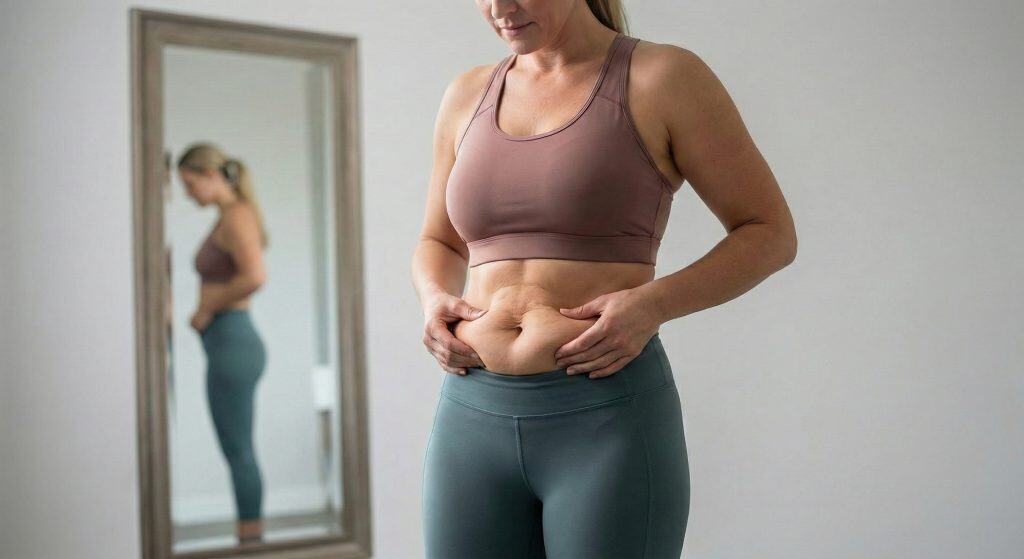
You did the hard part. You committed to a healthier lifestyle, stuck with it, and lost a significant amount of weight. But now you’re dealing with something no one warned you about—loose, hanging skin that won’t go away no matter how many planks you do or how much water you drink.
If you’re searching for answers, you’ve probably already discovered the frustrating truth: exercise, creams, and supplements can’t fix this. Once skin has stretched beyond its capacity to bounce back, only surgical removal will restore your body’s contour.
As a board-certified plastic surgeon who performs body lift surgery and other post-weight loss procedures, I help patients every week who are dealing with this exact situation. Here’s what you need to know about your options.
Why Loose Skin Happens After Weight Loss
Your skin is remarkably elastic, but that elasticity has limits. When you carry excess weight for an extended period, the skin stretches to accommodate it. The collagen and elastin fibers that give skin its “snap back” ability become damaged over time.
Several factors determine how much loose skin you’ll have after weight loss:
- Amount of weight lost: Losing 100+ pounds almost always results in significant excess skin
- How long you carried the weight: Years of stretching causes more permanent damage than months
- Age: Skin loses elasticity naturally as we get older
- Genetics: Some people simply have more resilient skin than others
- Sun exposure history: UV damage accelerates collagen breakdown
- How quickly you lost weight: Rapid weight loss (like with GLP-1 medications) often means more loose skin
If you’ve lost 50 pounds or more, especially after age 35, there’s a good chance you’re dealing with skin that won’t tighten on its own—no matter how long you wait.
Why Exercise Won’t Tighten Loose Skin
This is one of the most common misconceptions I hear. Patients come in frustrated after months of strength training, hoping to “fill in” the loose skin with muscle.
Here’s the reality: exercise builds muscle underneath the skin, but it cannot repair damaged skin tissue. If the collagen structure is compromised, no amount of working out will restore it. You can have strong, defined muscles and still have loose skin hanging over them.
The same goes for topical treatments. No cream, lotion, or supplement can rebuild the internal structure of overstretched skin. These products may temporarily improve skin texture or hydration, but they cannot remove inches of excess tissue.
Surgical Options for Loose Skin Removal
The only effective treatment for significant loose skin is surgical removal. The specific procedure depends on where your loose skin is located.
Tummy Tuck (Abdominoplasty)
The abdomen is usually the first area patients want addressed. A tummy tuck removes excess skin from the midsection, tightens the underlying abdominal muscles, and creates a flatter, more contoured profile.
This procedure is ideal if your loose skin is primarily located on your stomach. For patients with loose skin that extends around to the back and flanks, a more comprehensive approach may be needed.
Body Lift (Belt Lipectomy)
A body lift is essentially a tummy tuck that continues all the way around your body. It addresses loose skin on the abdomen, flanks, lower back, and buttocks in a single procedure.
This is often the best option for patients who have lost 100+ pounds, as the skin laxity typically affects the entire midsection circumferentially. The result is a dramatically improved body contour—many patients describe it as “getting their body back.”
Related: Body Contouring After Ozempic: What to Expect
Arm Lift (Brachioplasty)
The upper arms are another common problem area after major weight loss. The skin hangs from the back of the arm—what patients often call “bat wings”—and no amount of tricep exercises will tighten it.
An arm lift removes this excess skin through an incision along the inner arm. While there is a scar, it’s positioned where it’s less visible, and most patients feel the trade-off is absolutely worth it to wear short sleeves and sleeveless tops again.
Thigh Lift
The inner and outer thighs often develop significant loose skin after weight loss. A thigh lift removes this excess tissue, improving both the appearance and comfort of the thigh area.
Many patients don’t realize how much the loose thigh skin affects their daily life until it’s gone—no more chafing, no more rashes, and clothes fit properly again.
Combining Procedures
Patients who have lost substantial weight often need multiple areas addressed. I frequently perform combination procedures—for example, a body lift with an arm lift, or a tummy tuck with a thigh lift—to maximize results while minimizing total recovery time.
The specific combination depends on your anatomy, your goals, and your ability to take time for recovery. During your consultation, we’ll discuss what makes the most sense for your situation.
What About Liposuction?
I get asked this question constantly. Liposuction removes fat, not skin. If your primary issue is loose, hanging skin, liposuction alone won’t solve the problem.
However, liposuction is often combined with skin removal procedures to optimize the final result. For example, during a tummy tuck, I may use liposuction to contour the flanks for a smoother transition. The two techniques complement each other.
Am I a Candidate for Loose Skin Surgery?
You may be a good candidate if:
- You’ve lost 50+ pounds and have excess hanging skin
- Your weight has been stable for at least 3-6 months
- You’re in good overall health
- You don’t smoke (or are willing to quit before and after surgery)
- You have realistic expectations about scarring and recovery
The most important factor is weight stability. If you’re still actively losing weight, it’s better to wait. Operating on a “moving target” can compromise results—you may end up with additional loose skin as you continue to lose.
If you’re taking GLP-1 medications like Ozempic or Wegovy, we’ll discuss the optimal timing for surgery based on your weight loss trajectory.
Understanding the Scars
Let’s be direct about this: removing loose skin requires incisions, and incisions leave scars. There’s no way around it.
However, I place incisions strategically so they’re hidden by underwear and clothing whenever possible. Over time, scars typically fade significantly—though they never disappear completely.
Most patients tell me the scars are a non-issue compared to the loose skin they dealt with before. You’re trading visible hanging skin for a flat scar that only you (and your partner) will see.
Recovery: What to Expect
Recovery from skin removal surgery is significant—this isn’t a quick procedure with minimal downtime. Here’s a general timeline:
- First 1-2 weeks: The most difficult period. You’ll have drains, wear compression garments, and need assistance with daily activities. Most patients take prescription pain medication during this phase.
- Weeks 2-4: Gradually increasing activity. Drains are typically removed. You can return to desk work, but no exercise or heavy lifting.
- Weeks 4-6: Light activity resumes. You’ll still wear compression garments. Swelling continues to improve.
- 3-6 months: Final results become visible as all swelling resolves and scars begin to mature.
Plan for at least 2-3 weeks off work for a tummy tuck or body lift. Arm and thigh lifts may require slightly less downtime.
The Emotional Impact of Loose Skin
Something that doesn’t get discussed enough: loose skin after weight loss can be emotionally devastating. You worked incredibly hard to lose the weight, expecting to finally feel comfortable in your body—and then you’re left with skin that makes you feel just as self-conscious as before.
Many patients tell me they avoid intimacy, won’t wear certain clothes, and feel like their body “doesn’t match” their accomplishment. These feelings are valid, and they’re a legitimate reason to consider surgery.
This isn’t vanity—it’s about completing your transformation and being able to enjoy the results of your hard work.
Choosing the Right Surgeon
Post-weight loss body contouring is one of the most technically demanding areas of plastic surgery. The procedures are lengthy, the anatomy is challenging, and the margin for error is small.
When choosing a surgeon, look for:
- Board certification by the American Board of Plastic Surgery
- Significant experience with post-bariatric and post-weight loss patients
- Before and after photos of patients with similar starting points to yours
- Hospital privileges at accredited facilities
- A thorough consultation process where all your questions are answered
Schedule Your Consultation
If loose skin is preventing you from fully enjoying your weight loss success, surgery can help. During a consultation at my Beverly Hills office, I’ll examine your specific areas of concern, discuss which procedures would benefit you most, and create a customized treatment plan.
You’ve already done the hardest part by losing the weight. Let’s finish the transformation.
Ready to discuss your options? Contact us to schedule a consultation.
Dealing with facial volume loss after weight loss too? Read: Ozempic Face: How to Restore Facial Volume After Rapid Weight Loss
Considering multiple procedures? Body Contouring After Ozempic: What to Expect